How to Choose the Right Car Stereo for Your Vehicle
Overwhelmed by the sheer number of head units on the market? This step-by-step guide walks you through everything — from DIN sizes to connectivity — so you pick the perfect stereo for your car.

Choosing a Car Stereo That Actually Fits Your Life
Replacing your factory head unit is one of the fastest ways to modernise a vehicle's interior. A good aftermarket stereo delivers better sound processing, smartphone integration, and features your original radio was never designed to offer. The problem is that most buyers stare at a wall of spec sheets and walk away more confused than when they started. This guide strips the jargon away and focuses on the decisions that genuinely matter.
Step 1 — Measure Your Dashboard Opening
Car stereos come in two standard chassis sizes. A single DIN unit is roughly 180 mm wide by 50 mm tall — the slim slot you see in older cars and many modern vans. A double DIN is exactly twice the height, giving room for a touchscreen. Newer floating-screen models sit on a single DIN chassis but extend a large display above the dashboard, so they physically fit a single DIN slot while looking like a tablet. Before you spend a penny, pop the existing radio out (or check your vehicle manual) and confirm which size you need. Getting this wrong is the most common — and most avoidable — mistake.
Step 2 — Decide Which Connectivity Features You Need
This is where modern stereos really shine. Here are the main technologies you will encounter:
- Apple CarPlay / Android Auto — mirrors your phone's navigation, music, and messaging apps directly on the stereo screen. Wireless versions let you leave the phone in your pocket; wired versions are cheaper but still very convenient.
- DAB+ Digital Radio — the UK is gradually transitioning to digital radio. A DAB+ tuner gives you access to hundreds of stations with crystal-clear reception and no FM hiss.
- Bluetooth 5.0 — essential for hands-free calling and wireless audio streaming. Later Bluetooth versions offer better range and lower latency.
- USB and AUX — still useful for plugging in thumb drives loaded with FLAC or MP3 files, or connecting older devices without Bluetooth.
If you mostly listen through Spotify on your phone, wireless CarPlay or Android Auto should be your top priority. If you rely on radio for commuting, make sure DAB+ is included — some budget units still ship with FM-only tuners.
Step 3 — Screen Size and Quality
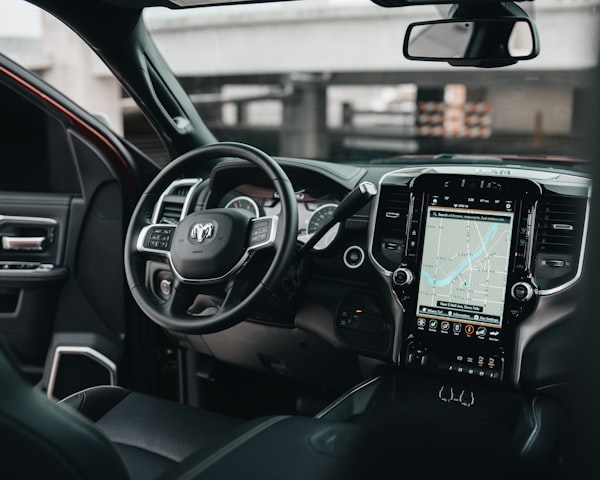
Touchscreens range from 6.2 inches up to nearly 11 inches on premium floating displays. Bigger is not always better: a massive screen in a small dashboard can obstruct air vents or look out of place. Consider the resolution too — a 6.8-inch HD capacitive panel will look far sharper than a cheap 9-inch resistive screen. Capacitive screens (like your smartphone) respond to light finger taps, while resistive screens require firmer presses and feel sluggish by comparison.
Step 4 — Sound Quality and Processing
An often overlooked factor. Better head units include a built-in digital signal processor (DSP) with a multi-band parametric EQ, time alignment, and high-pass / low-pass crossover settings. These tools let you — or a professional installer — fine-tune the stereo's output to compensate for your car's unique cabin shape, speaker placement, and road noise. A head unit with strong processing will make even budget speakers sound noticeably better.
Step 5 — Budget Ranges and What to Expect
Here is a rough guide to what different price brackets will get you in the UK market:
- Under £100 — single DIN, Bluetooth, USB, FM/AM. No touchscreen. Brands like Pioneer's MVH-S series are excellent at this level.
- £100 – £250 — double DIN or floating screen, wired CarPlay/Android Auto, DAB+, basic EQ. JVC and Kenwood dominate this sweet spot.
- £250 – £500 — wireless CarPlay/Android Auto, high-resolution displays, Bluetooth 5.0, advanced DSP, HDMI input. Pioneer and Kenwood's flagship models live here.
- £500+ — premium floating screens up to 11 inches, audiophile-grade DACs, multi-zone control, and integration with OEM cameras and sensors. Sony and Alpine compete at this end.
Step 6 — Don't Forget the Accessories
Almost every aftermarket stereo needs a fascia panel (the trim piece that fills any gaps between the stereo and your dashboard) and a wiring harness adapter (which connects the stereo's plug to your car's factory loom without cutting wires). Many vehicles also need a steering wheel control interface to retain your steering wheel audio buttons. These accessories typically cost £20 – £60 combined and are essential for a clean, factory-like finish. Browse our full accessories range to find the right kit for your car.
Our Recommendation
For most drivers, the sweet spot sits between £150 and £350. At this price you get a responsive touchscreen, wireless smartphone mirroring, DAB+, and decent sound processing — everything the average commuter or road-tripper needs. If sound quality is your absolute priority, invest in a unit with a strong DSP and spend the rest of your budget on better speakers and a dedicated amplifier.
Still unsure? Visit our Bradford or Leeds store and our team will walk you through the options with a hands-on demo. Or browse the full range of car stereos and screens online — we offer next-day UK delivery and professional installation from just £30.
Upgrade Your Drive Today
Ready to experience the sound quality we just talked about? Browse our premium selection of car audio systems, speakers, and accessories.
Browse Car Audio Products